Blog · English
Cross-broker copy on NSE and BSE desks
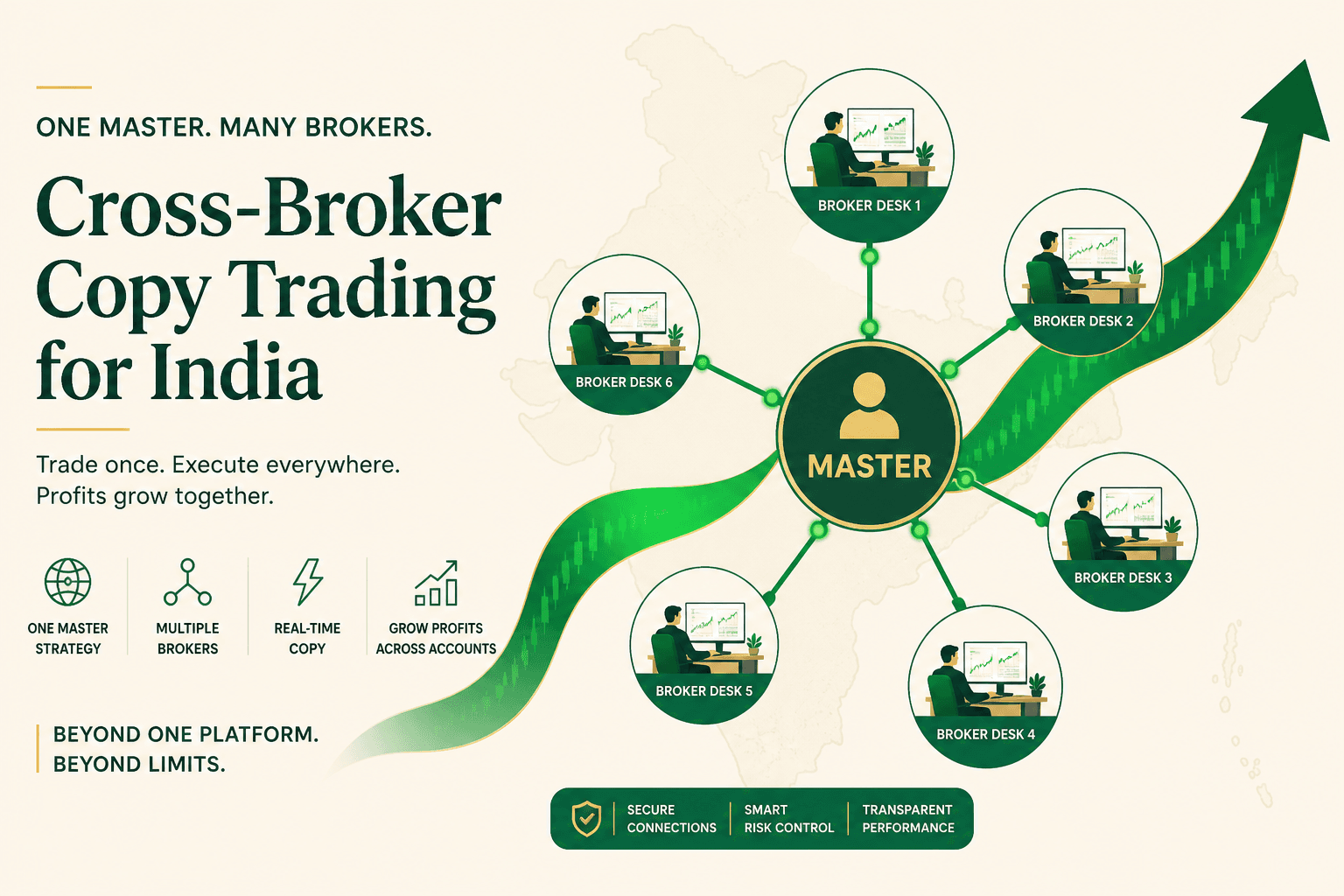
Master and children do not have to share a broker. A Groww or Upstox master can fan out to Dhan, Zerodha, Alice Blue, and other wired desks when the same cash or F&O contract exists on both sides.
That is the real unlock for Indian multi-account ops: keep the edge on the book you already trade well, and land the same contract on whatever brokers your capital actually sits on — so profitable master fills are not trapped on a single platform.
How instrument resolve works
CopyTrading keeps a shared Mongo instruments catalogue synced from each broker’s master file. Resolve prefers exchange:token, then ISIN, then cash-symbol fallbacks that tolerate IDEA vs IDEA-EQ style suffixes and prefer NSE over BSE when both exist.
If a slave skips with unresolved_instrument, wait for sync or retry after the catalogue finishes — large Kite CSVs can land after the first copy attempt. Already-placed slaves are never sent again.
Broker quirks that are not copy bugs
Alice Blue API place is IP-locked until your host (or proxy exit) is whitelisted. Upstox access tokens expire daily — reconnect at session start. Groww standard Trading API keys may lack live LTP even when place works.
Knowing these constraints keeps you from blaming the watcher when a desk is simply offline or blocked by the broker.
Ops checklist for a multi-broker floor
One live readable master. Paid, copy-enabled slaves. Shadow on any new broker pair. Morning reconnect habit for OAuth desks. Trades tab open for the first half hour of a volatile session.
Personal users can still trade their own connected desk without copy until the one-time master fee unlocks fan-out. That keeps accidental mirroring off until you are ready.
Key takeaways
- Same NSE/BSE contract can land on different brokers via resolve.
- Treat IP locks and daily OAuth expiry as broker rules.
- One master, paid slaves, shadow new pairs — then chase session P&L.