Blog · English
Shadow mode: dry-run a child before it places live
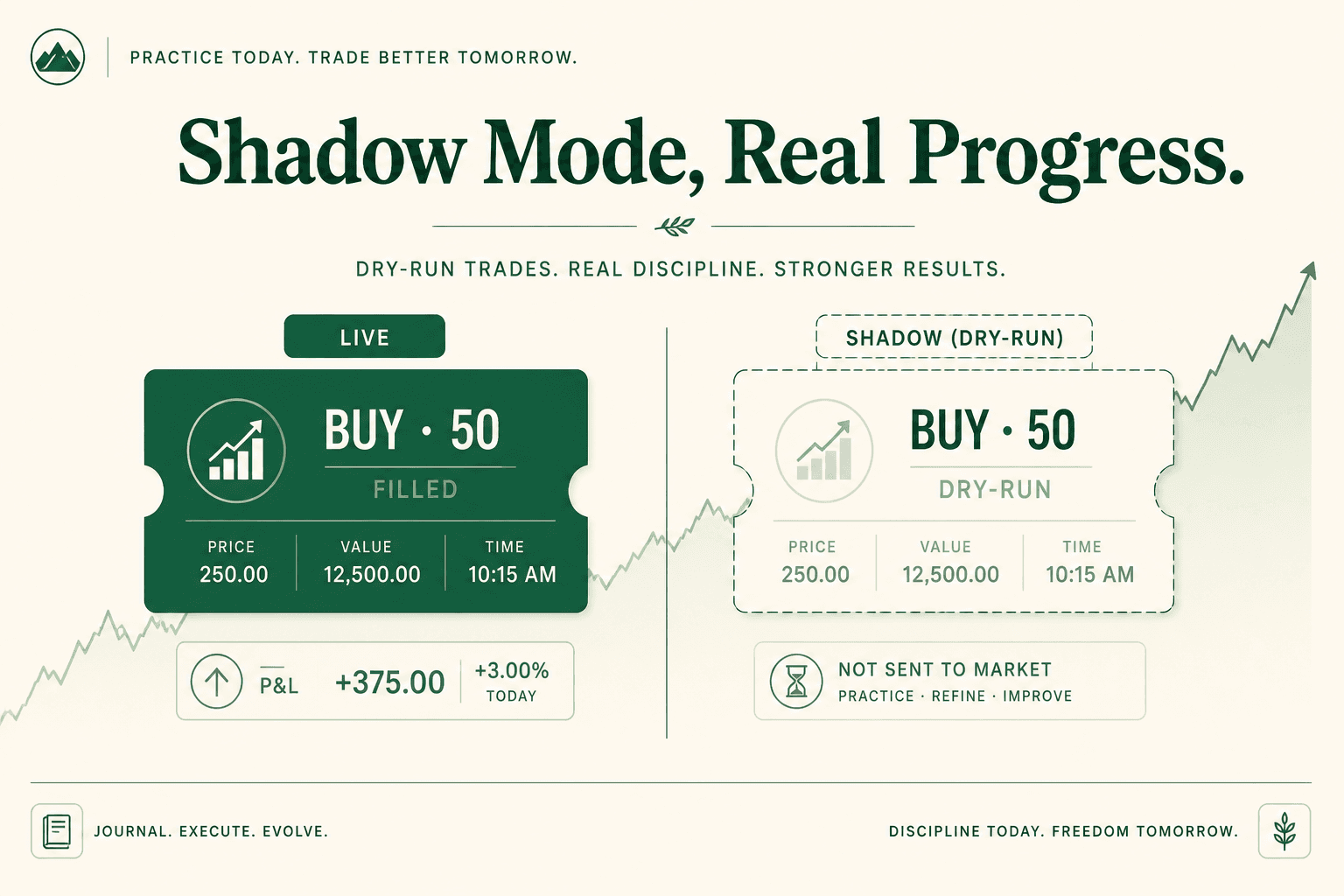
Shadow mode is the dry-run path. The master order is still observed, the child plan is still built, and the audit trail still records what would have been sent — but nothing is placed on that broker.
Desks that skip this step often burn the first profitable master sequence on a bad mapping, wrong multiplier, or unpaid slave. Shadow lets you prove the plumbing while the master edge is still yours to keep.
What still happens in shadow
Instrument resolve, side normalisation, quantity flooring, and skip filters still run. You see SHADOW in the control plane and a clear row in Trades — without exchange risk on that child.
Fail-safe intent still matters: if a segment should never land on a desk, keep filters on. Shadow withholds the place call; it does not bypass your rules.
When to keep a desk in shadow
Use shadow when you add a slave, change a multiplier, promote a desk, or switch brokers. Cross-broker paths (Alice Blue master → Zerodha/Dhan child) especially need a dry-run to confirm the same NSE/BSE contract resolved.
You can leave a desk in shadow indefinitely for paper bookkeeping, or flip it live after a few clean sessions in the audit log.
Going live without giving back the edge
When you enable live copy, watch the first mirrors closely. Confirm order ids, qty, and broker acknowledgements. Retry exists for failed/skipped slaves where safe — never treat retry as free if the broker may already have taken the first ticket.
If margin fails, pause that child and keep the rest of the floor on the master’s path. One weak wallet should not flatten everyone else’s day.
Key takeaways
- Shadow builds and logs the child plan without placing.
- Dry-run new brokers and multipliers before live profit sync.
- Retry carefully; pause weak desks, not the whole floor.