Blog · English
How slave multipliers size each mirrored order
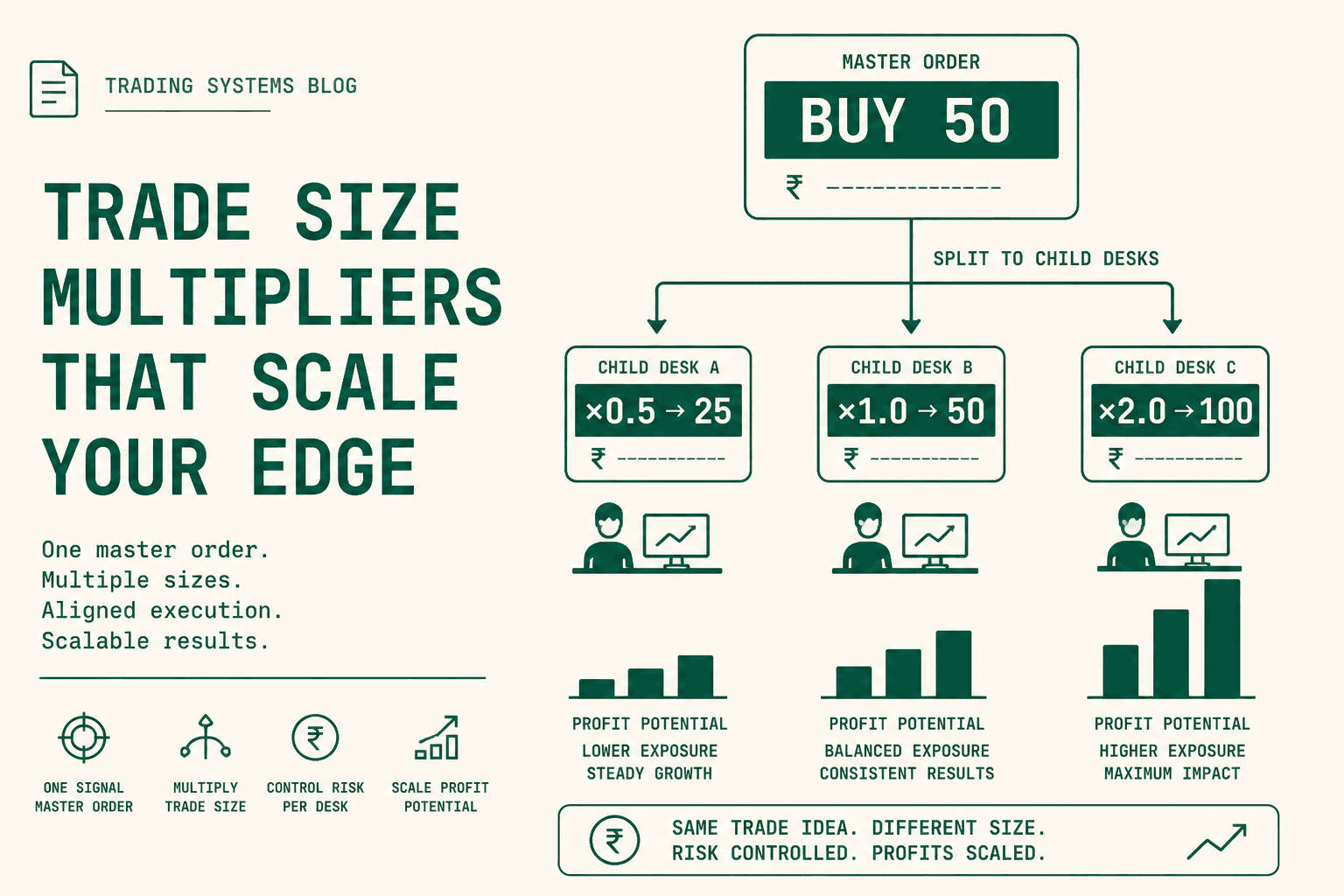
Every slave desk carries its own multiplier. When the master buys 50, a child at ×0.5 gets 25 and a child at ×2.0 gets 100 — floored to a whole quantity so brokers never see a fractional ticket.
That single control is how offices with uneven capital still ride the same master edge. A personal book can stay small; a prop-style desk can run larger size; a paper desk can sit at ×1 in shadow while you verify the math. Profit opportunity stays shared; risk stays intentional.
The math the platform actually runs
Child quantity = floor(masterQty × slaveMultiplier). If the result is ≤ 0, that slave is skipped with qty_zero — the engine will not invent a minimum lot for you.
Side, product (intraday vs delivery), and limit/market intent follow the master plan, with broker-specific guards (for example Alice Blue never sends MARKET). Multipliers only scale size.
Why independent multipliers matter for P&L
Scaling one desk does not change another. If ALPHA is ×2 and BETA is ×0.5 on the same winning master scalp, ALPHA captures more rupee P&L and BETA stays capital-light. That is deliberate desk design, not a bug.
Teams often start new slaves at ×0.5 or ×1.0 until fills look correct in the Trades audit. Shadow mode still applies the multiplier to the logged ticket, so you can verify sizing before any live place.
F&O lots, cash shares, and practical ranges
For index options and futures, remember lot size is already baked into master qty. A multiplier of 2 means two times the master’s lots, not “two times the underlying index.” For cash, multipliers scale share count the same way.
Useful working range is roughly 0.01–100, but most desks live between 0.5 and 3. Extreme values are for special ops, not day-one defaults.
Changing size without reconnecting
Edit the multiplier from the Slave desk anytime. The next eligible master order uses the new factor. No broker reconnect is required.
After a size change, place one small master ticket (or use shadow) and confirm the audit row before you resume full size. That five-minute check saves expensive mis-sizes.
Key takeaways
- Qty = floor(master × multiplier); zero means skip, not a surprise lot.
- Independent multipliers let uneven capital share the same master edge.
- Verify in shadow after every size change.