Blog · English
Own-account copy trading is not a signal service
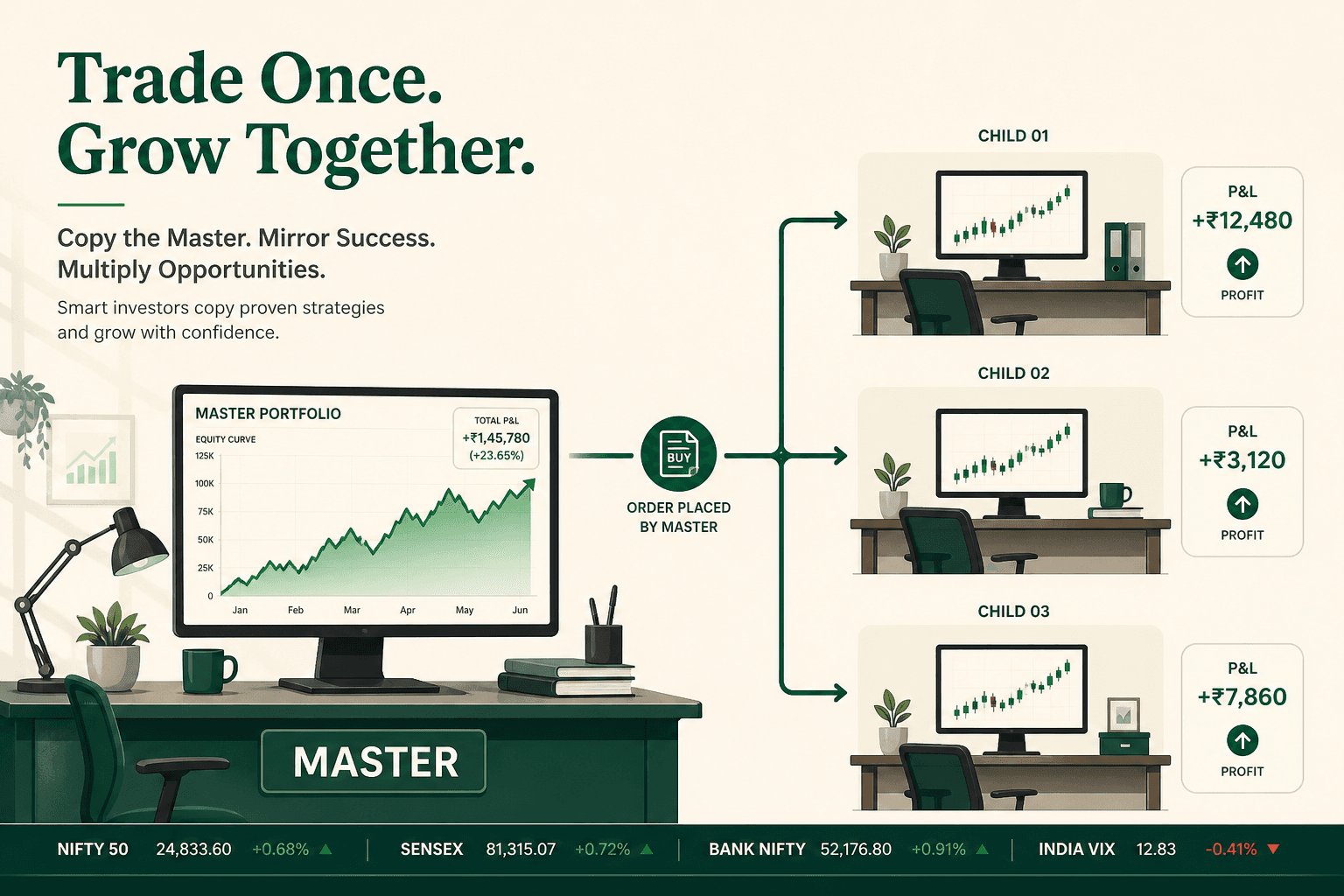
Indian desks often hear “copy trading” and picture a Telegram channel, a YouTube guru, or a public strategy feed. CopyTrading is built for a narrower job: you already own the master broker account, and you already own the child desks that should follow it.
That distinction is not marketing fluff. It changes who takes the trading decision, who carries margin risk, and what the platform is allowed to automate. When your master books a profitable scalp on NIFTY or a cash swing on RELIANCE, the point of own-account copy is to land the same intentional ticket on every book you operate — scaled, filtered, or shadowed per child — so desk P&L stays coherent instead of scattered across manual re-entry.
What signal services actually sell
A signal service sells access to someone else’s ideas. You may get a chat alert, a webhook, or a delayed fill dump. You still decide whether to trust the source, size the trade, and click buy on each account. Latency, typos, and FOMO are on you.
PMS-style or advisory products go further: a registered intermediary may manage or recommend portfolios under a different legal frame. CopyTrading is neither. It does not pick stocks, publish strategies, or follow a public trader’s book.
What own-account copy does instead
Own-account copy keeps the decision on your master book. You (or your desk process) place the trade once. The platform observes that order, builds a per-slave plan (side, qty from multiplier, product, resolved instrument), and fans it out to eligible children on Angel One, Alice Blue, Fyers, Upstox, Zerodha, Dhan, or Groww.
When the master path is clean, children see the same direction and timing. That is how prop-style and multi-account offices keep a winning master scalp from becoming a mess of late, mistyped tickets on satellite accounts — the classic way “manual copy” destroys edge.
Risk, compliance, and why ownership matters
Because every account is yours, you are not outsourcing stock selection to a stranger. Broker KYC, margin, and contract availability stay with each linked desk. CopyTrading is not a SEBI-registered investment adviser or portfolio manager.
Operationally, you still need hygiene: one live readable master, paid copy-enabled slaves, and shadow mode on any new desk until the Trades audit shows the right symbol, side, and quantity for a few sessions.
A practical path from first connect to live profit sync
Connect the master you already trade. Add a slave, leave it in shadow, place a small master order, and read the audit. Confirm instrument resolve across brokers. Then turn copy live and watch the first mirrors in the Trades tab.
If a child hits a margin shortfall, fail-safe can pause that desk without stopping the rest of the floor — so one weak wallet does not cancel a good master day for every other book.
Key takeaways
- CopyTrading mirrors your master onto your children — it is not a guru signal feed.
- Same intentional ticket across desks is how multi-account P&L stays aligned.
- Shadow first, then live; pause weak children without killing the whole floor.